



Superman Blown to Bits

Since he first leaped over a building in a single bound in 1938, Superman has appeared on screen in the serials, television, and the movies, and after nearly 70 years he remains the definitive superhero. Now the Man of Steel is back in Superman Returns, the newest movie of the franchise since Superman IV appeared in 1987. A lot has happened in those 20 years, but mainly the expectations for visual effects have gone sky high. Today anything less than perfect illusions are not acceptable.

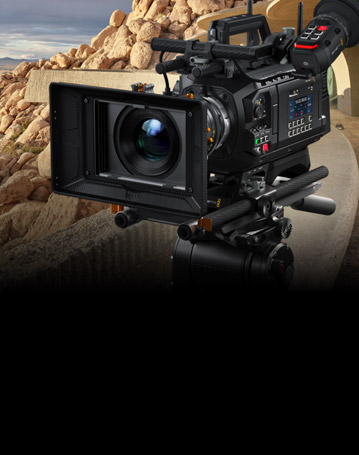
With the responsibility of bringing the best-known comic hero in history to a new generation of moviegoers, the production of Superman Returns pushed the envelope on several fronts, including the use of the Panavision-Sony Genesis camera instead of 35mm film. This, and the fact, that multiple visual effects houses in L.A. and San Francisco, had to coordinate their efforts with the live-action team shooting the movie in Sydney, Australia, which required some innovative thinking when it came to managing artists and data. The solution was the L.A.-based Digital Sandbox.

Scott Anderson, founder of Digital Sandbox, calls his company an architecture firm for visual effects. His idea was to offer an alternative to the usual way of coordinating multiple facilities on a blockbuster. Typically, responsibility is divided between competing shops that have different pipelines and workflows. Coordinating production is as much an exercise in politics as practicality that leads to a great deal of redundancy and inefficiency. Anderson, whose credits include King Kong; Sky Captain and the World of Tomorrow; I,Robot; Hollow Man; Starship Troopers; and Terminator 2, has witnessed more than his share of inefficiency and wanted to develop a better approach. Digital Sandbox was formed with the idea that all the data from previsualization to the digital intermediate should be under the control of a single authority. Under this mandate, Digital Sandbox focuses on three things: creative design, planning, and project management.

The position of data ‘czar’ is a new idea in Hollywood, but Anderson didn't stop there in envisioning a better way to manage the workflow of a blockbuster movie. He added to the mix a new media view of production tools: non-proprietary off-the-shelf software and hardware running on PCs. While the company eventually required some custom software, the majority of its artists and infrastructure are brought on board for the length of a job and use out-of-the-box hardware and software. “Right now we keep a small office for general work and demos,”  Anderson explains. “Practically, we've built our solutions to co-locate with a production. On Superman Returns our 'offices' were located right between the visual effects, editorial, and postproduction spaces. We just set up shop right where they needed us.”

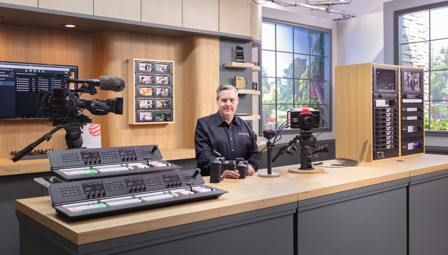
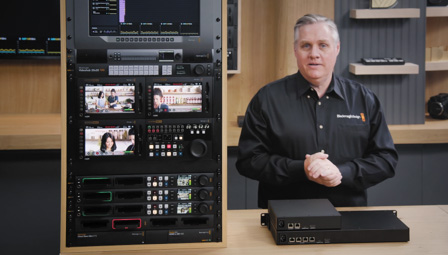
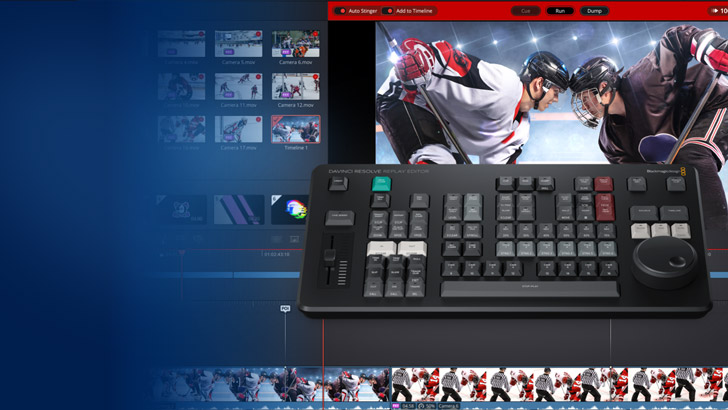
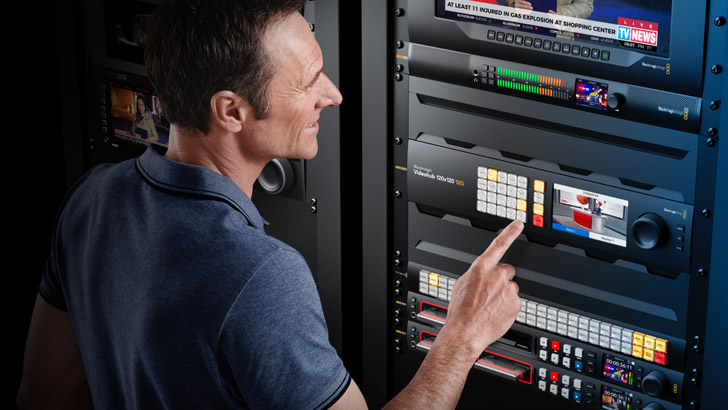
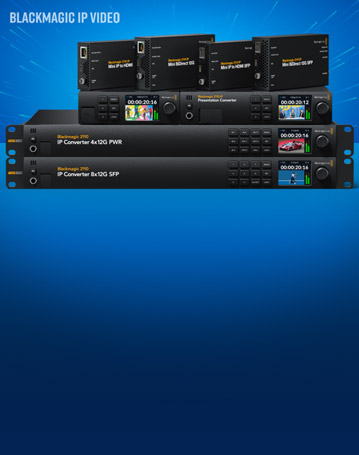
In keeping with this low-overhead philosophy, Digital Sandbox uses a foundation technology, a digital HUB, to move data between facilities. This pipeline mainly relies on Globalstor tools, Assimilate's™ Scratch, and specialty hardware from Blackmagic Design, including Blackmagic's HDLink, DeckLink HD, Multibridge Extreme, and Workgroup Videohub. The pipeline for Superman Returns also included a Sony SRW-5500 HDCAM SR deck, but began with data from the Panavision-Sony Genesis camera.

According to Anderson, here’s how the Superman pipeline worked: “Our goal is to get the highest quality imagery into the workflow at the earliest possible moment. In this case, we used Blackmagic DeckLink HD Pro and the Multibridge Extreme to first digitize the HD SR tape to AVI. This was controlled via Premiere Pro. We then extracted the DPX frames from the AVI files using Blackmagic's FrameLink. Through both digitizing and extraction, the full data range is maintained and unconverted from the raw Panalog4 encoding. The HDLink in conjunction with our LUTs would decode the Panalog4 for proper viewing. We also created some debugging and QC LUTs for viewing and creating our negative reports. The work then flowed through Scratch and our proprietary procedures and tools out to vendors and to our digital conform team. When materials returned, we used the Blackmagic tools in reverse to layback to tape for viewing or archiving. We also used the nVidia FX 4500 SDI as part of the dailies process for tape output from within Scratch. Final delivery was conformed but ungraded DPX files delivered on hard drive to TDI.”

Because Digital Sandbox was involved in the production of Superman Returns even before VFX houses were chosen, it was able to test the pipeline long before shooting began. In fact, Anderson's involvement in the movie began before the decision was made to shoot electronically. “Genesis required us to do a lot of image testing,” Anderson says. “Visual effects consultant Mike Kanfer and I worked with Panavision and Superman production, coordinating and doing a number of standard VFX and camera tests on Genesis and film – evaluating exposure, noise levels, and green and blue screen separations.” The very nature of Digital Sandbox’s controlled approach required knowing every aspect of the Genesis camera since the company was taking responsibility for all of the data. On top of that, Superman Returns was the first blockbuster to begin filming with the Panavision-Sony Genesis camera. From any vantage point, the film required an innovative pipeline.

Fortunately, Anderson’s careful evaluation process prior to principle photography revealed that some hardware solutions were altering the captured data. “When looking at our needs – a pure data capture – we looked for a solution that gave us exactly what is on the tape and records back exactly what is on the drive,” Anderson says. “It was amazing how many cards didn't actually do that. We tested all the usual suspects and found what we considered show-stopping problems with most. Blackmagic was the first hardware to be able to provide us a card to accurately capture what we had on the tape. When I say accurate, I mean to a pixel and code value. We know that we were being tougher on HD SR and the cards than anyone else, as we would find slight generational loss and slight variances between decks that had never been reported. At that time, the Blackmagic cards were the only cards that passed our criteria.”

Anyone who sees Superman Returns will find it impossible to see any difference on screen between it and 35mm-captured films. This is due to the enormous strides made in digital acquisition in the last three years, but also to the lossless handling of data in its creation. Anderson hopes word of Digital Sandbox's innovative approach reaches other projects coming up in Hollywood.

In the meantime, audiences are happy to have two and a half hours of thrills with the visitor from Krypton. Their enjoyment is built on tens of thousands of frames of carefully handled images without which the world's most famous superhero would never get off the ground.